
Care for specific needs
Where hair removal gets nuanced — by skin tone, hair color, gender-affirming goals, or a medical condition.
Transgender & Gender-Affirming Hair Removal
Gender-affirming hair removal is recognized by WPATH as medically necessary care for gender dysphoria. Electrolysis treats each follicle directly rather than by pigment, so it permanently treats every hair color — including the light, gray, or fine hair laser cannot target — which is why it is the mainstay of gender-affirming hair removal.
Read moreLaser Hair Removal for Darker Skin Tones
Older lasers struggled on darker skin because they could not tell hair pigment from skin pigment. The Candela GentleMax Pro solves this with two wavelengths — a 755 nm Alexandrite for lighter skin and a 1064 nm Nd:YAG that penetrates past surface melanin — making safe, effective treatment possible for Fitzpatrick IV–VI skin types.
Read morePermanent Hair Removal
You will see two phrases advertised — “permanent hair removal” (electrolysis) and “permanent hair reduction” (laser). The difference is largely regulatory and legal terminology: for the hairs a laser successfully treats, the results are also long-lasting and permanent. The distinction that matters in practice is what each method can treat and how much maintenance the body’s new growth may call for over time.
Read moreGray, White & Light Hair Removal
If you have gray, white, or very light hair, laser hair removal will not work — and no laser, however new, changes that. Laser needs melanin to absorb its energy; unpigmented hair gives it nothing to target, so the pulse passes through and the hair keeps growing. Electrolysis is the answer.
Read moreIngrown Hair & Razor Bump Treatment
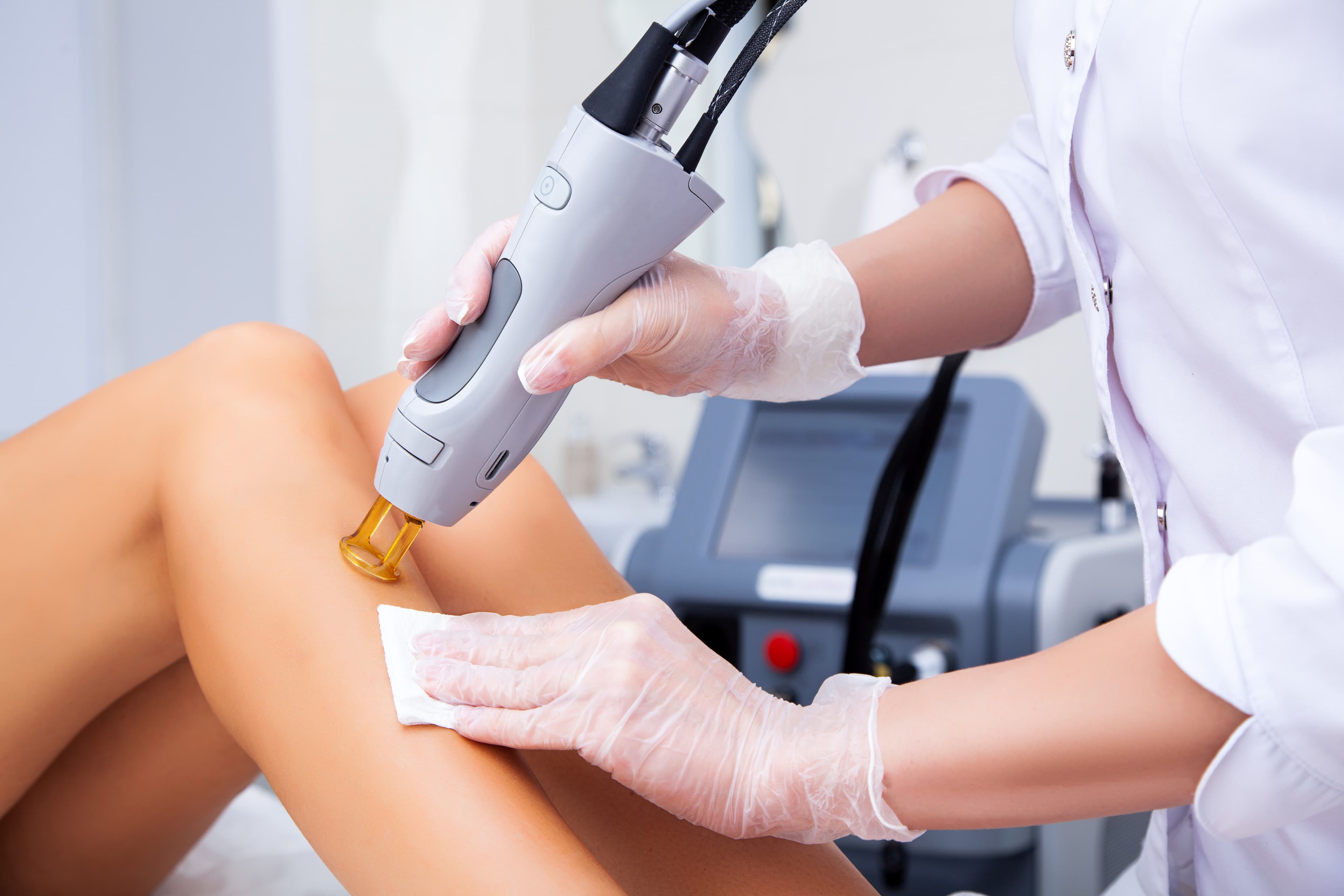
Chronic ingrown hairs and razor bumps — clinically, pseudofolliculitis barbae — happen when shaved hair curls back into the skin and inflames it. The most durable fix is to stop the cycle at its source: reduce the hair, and there is far less to grow inward. Laser hair removal is the most effective approach for this.
Read moreLaser Hair Reduction for Pilonidal Disease
Pilonidal disease is driven in part by hair entering the skin of the gluteal cleft, so reducing that hair is increasingly used to lower the chance of recurrence. Published randomized data show laser hair depilation meaningfully cutting one-year recurrence. This is adjunctive care that works alongside — not instead of — your physician or surgeon.
Read moreStrawberry Legs Treatment
“Strawberry legs” is the speckled, dotted look that shows up on the legs when hair follicles and surrounding pores become darkened, clogged, or inflamed — frequently after shaving, waxing, or repeated razor irritation. Because so much of it traces back to the hair sitting in the follicle, durably reducing that hair removes the part of the problem a razor only ever resets.
Read more